The Essential Guide to Sourdough Log Books for Your Low-Content Business
In the bustling world of home baking, sourdough has carved out a special niche. Its unique flavor, textural complexity, and the almost magical process of nurturing a living culture have captivated enthusiasts worldwide. Yet, baking perfect sourdough is a science as much as an art, requiring careful tracking of ingredients, fermentation times, and results. For the home baker, this can often mean scattered notes on loose paper or forgotten digital entries. Enter a simple, powerful tool that solves this problem and presents a brilliant business opportunity: the Sourdough Log Book. Specifically, for entrepreneurs looking at the low and no-content publishing market, a professionally designed Sourdough Log Book KDP Interior is the perfect foundation for a thriving passive income stream.
What is a Sourdough Log Book and Why Does It Matter?
A sourdough log book is a dedicated journal for bakers to systematically record every detail of their sourdough journey. Think of it as a lab notebook for your kitchen. Each entry typically includes details like the date, the specific starter used, flour types and weights, water temperature, ambient room temperature, fermentation durations (for bulk rise and proofing), baking temperature and time, and, crucially, the final outcome and personal notes. This meticulous record-keeping transforms baking from guesswork into a repeatable, improvable process.
For the baker, its significance is immense. It allows for tracking the health and performance of a sourdough starter over seasons. It helps pinpoint why one loaf turned out perfectly while another was too dense. By reviewing past successful bakes, one can replicate them exactly. It encourages experimentation with methodical tweaks, fostering deeper learning and mastery. Essentially, it brings clarity and control to a craft that thrives on biological variables.
The Perfect Product for the Low-Content KDP Business Model
The rise of print-on-demand platforms like Amazon’s Kindle Direct Publishing (KDP) has democratized publishing. A standout category within this ecosystem is "low-content" or "no-content" books—books that provide a structured format (like logs, planners, journals, or workbooks) but require the user to fill in the content themselves. These products solve specific, everyday problems for niche audiences.
A Sourdough Log Book KDP Interior fits this model flawlessly. It targets a passionate, growing community—home bakers, from beginners to experts—who have a clear need for a organizational tool. The product is the interior: the designed, formatted pages ready for printing. The business creator does not write baking recipes or advice; they provide the elegant, functional framework for the baker to do so. This makes it an accessible business avenue for designers, organizers, or anyone spotting a market need, without requiring deep subject matter expertise in sourdough itself.
Key Features of a Ready-to-Use KDP Interior
When evaluating a pre-designed interior, like the example provided, several technical and practical features indicate its quality and readiness for business:
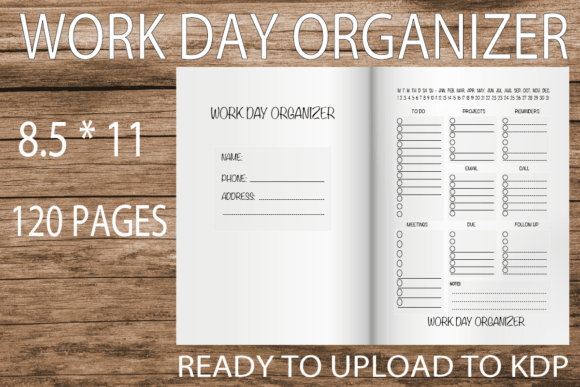
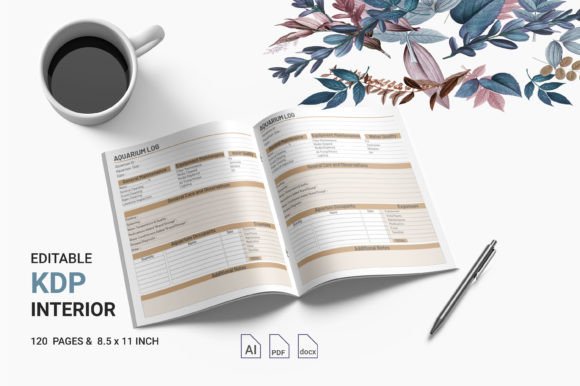
- Dimensions (8.5 x 11 Inches): This is the standard US Letter size, a popular and familiar format for journals, ensuring compatibility with KDP’s print specifications and customer expectations.
- 120 Pages: A substantial length offering ample space for many baking sessions, making the book feel valuable and comprehensive.
- No Bleed: This design choice means all content is within a safe margin area. It simplifies printing and is ideal for interiors where text and lines are the primary elements, avoiding the complexity and cost of full-bleed designs.
- 100% Ready for KDP Uploading: The interior comes as a print-ready PDF formatted to KDP’s precise guidelines. This eliminates the daunting technical hurdle of setting up margins, page size, and file type correctly, allowing you to focus on marketing and branding.
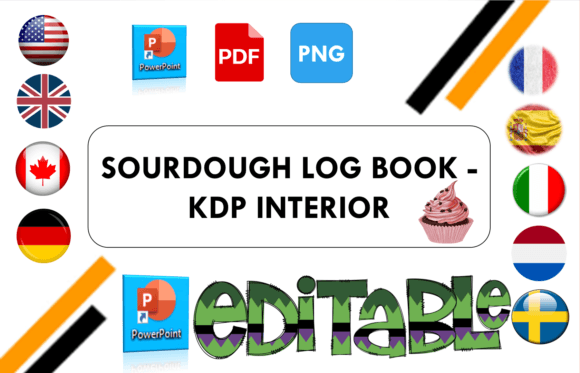
- Multiple File Formats (PDF, PPT, PNG): Providing the source files (like PowerPoint) offers flexibility. You can potentially make minor customizations, adjust colors, or add your branding before finalizing the PDF. PNG files might be for individual page previews or marketing materials.
- High-Resolution & Print-Ready: Ensuring crisp text and clean lines when physically printed, which is critical for customer satisfaction.
- Interior Only: A crucial point. The seller provides the inside pages. You, as the publisher, must create and add your own cover design through KDP’s cover creator or a design tool. This separates the interior design service from cover art, allowing you to establish your unique book’s brand identity.
The mention of specific marketplace tags (com USA – de Germany – uk United Kingdom – ca Canada – fr France – es Spain – it Italy – nl Netherlands – se Sweden) highlights that the interior is designed with consideration for international sales, likely using language-neutral layouts (icons, universal terms) or having space for notes in any language.
Building Your Business with a Sourdough Log Book
How does this fit into a modern, digital business lifestyle? The low-content KDP model is celebrated for its potential for passive income. Once you upload your interior PDF and design a cover, the book is listed on Amazon. When a customer orders it, Amazon handles the printing, shipping, and customer service. You receive a royalty. This can be run as a solo microbusiness, scaled by creating multiple variations (different sizes, color schemes, or slightly altered layouts), or expanded into other niche log books (for gardening, brewing, fitness tracking).
The practical relevance is twofold. First, you solve a real problem for bakers, offering them a tool to elevate their hobby. Second, you create a streamlined, automated asset for yourself. It fits into the trends of remote work, digital entrepreneurship, and leveraging global platforms to reach specific audiences. Education in this context is about you learning the KDP process and market dynamics, not about becoming a sourdough expert.
Clarifying Common Assumptions
There are often misunderstandings about low-content publishing:
- “It’s Just a Notebook, So It Won’t Sell.” On the contrary, niche-specific functional notebooks sell very well. A generic notebook faces immense competition. A specialized Sourdough Log Book targets a precise audience actively searching for a solution to their note-taking chaos.
- “I Need to Be a Graphic Designer.” Not necessarily. By purchasing a professionally designed, editable interior (like one offering PPT files), you are leveraging existing expertise. Your role becomes that of a publisher and marketer, understanding the audience and presenting the product effectively.
- “One Book Won’t Make Much Money.” While true, a single well-targeted book can establish a presence. The strategy often involves creating a series or a brand around similar tools, building cumulative revenue. The sourdough log can be the first, tested product in a broader line of “craft logs.”
Examples and Broader Understanding
Consider a baker named Anna. She begins her sourdough journey excitedly but finds her results inconsistent. Her notes are in a random notebook mixed with grocery lists. She searches Amazon for “sourdough journal” and finds your log book. Using it, she methodically records her next ten bakes. By comparing entries, she discovers her loaves proof better at 78°F than at 72°F. That insight, facilitated by your book’s organized layout, transforms her baking. She becomes a satisfied customer, and your business receives a positive review—the mentioned “awesome feedback ⭐⭐⭐⭐⭐”—which fuels further sales.
This example shows the product’s real-world utility. It also connects to broader themes: the human desire for mastery, the intersection of tradition (sourdough) and modern tools (structured journals, online marketplaces), and the growth of hobbyist economies. Your business isn’t just selling pages; it’s enabling organization, learning, and satisfaction within a passionate community.
Steps to Launching Your Sourdough Log Book on KDP
With a ready interior, the path to publication is clear:
- Acquire the Interior Files: Ensure you have the final print-ready PDF and any editable source files.
- Design Your Cover: Use KDP’s cover creator tool or a service like Canva to design an attractive, professional cover that clearly communicates the book’s purpose. Consider imagery related to baking, bread, or rustic kitchens.
- Upload to KDP: In your KDP account, create a new paperback book. Input metadata (title, description, keywords). A good description should highlight the book’s use: “Organize your sourdough experiments with this dedicated 120-page log…” Upload your interior PDF and cover file.
- Set Your Price and Royalty: KDP will show a printing cost. Set your list price above this to ensure a royalty. Research similar log books to gauge competitive pricing.
- Publish and Market: Once approved, your book goes live on Amazon. Share it on social media channels where sourdough bakers congregate (Facebook groups, Instagram baking communities, Reddit forums).
Conclusion: A Tool for Bakers, An Opportunity for You
A Sourdough Log Book KDP Interior represents a meeting point of need and opportunity. For the burgeoning community of sourdough artisans, it offers a structured path to better baking through record-keeping. For the entrepreneur, it provides a validated, ready-to-use product core to build a low-content publishing business with minimal upfront creation effort. By focusing on a clear niche, ensuring technical quality with features like KDP-ready formatting and high-resolution files, and understanding the audience’s deep need for organization, you can transform a simple interior file into a valuable asset for both your customers and your entrepreneurial journey. The feedback from happy bakers will not just be stars on a page; it will be the proof of a problem solved and a business idea baked to perfection.