What a Happiness Journal Offers: A Guide to Formats and Fit
If you are exploring the world of personal reflection tools, the concept of a Happiness Journal is likely familiar. It is a structured diary designed to guide users through practices of gratitude, positive reflection, and mindful tracking of daily experiences. The core aim is to cultivate a more intentional awareness of joy and contentment. When considering such a tool, the format and design become critical decision factors. You might encounter a Happiness Journal as a physical book, a printable template, or a fully editable digital file intended for self-publishing.
Understanding the Happiness Journal as a DIY Publishing Product
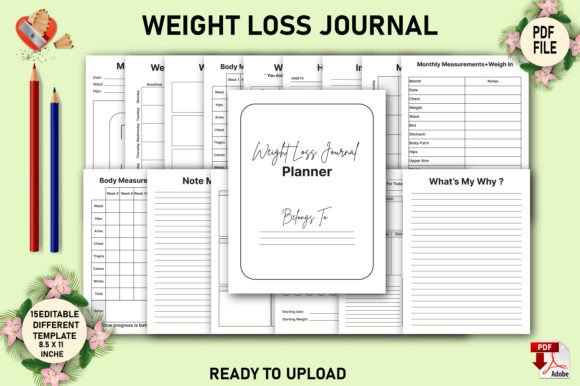
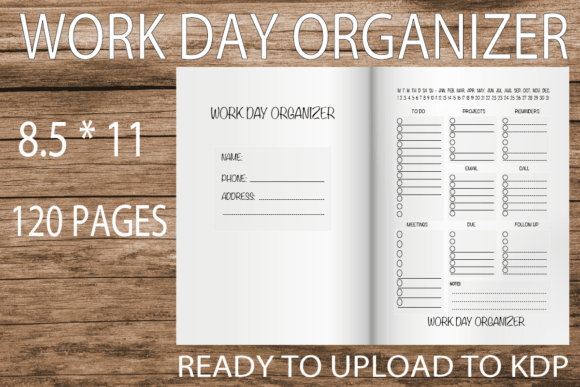
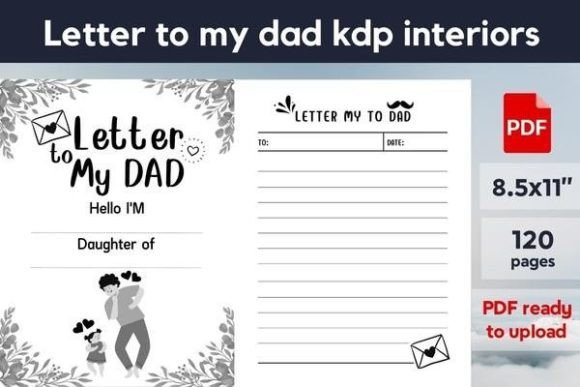
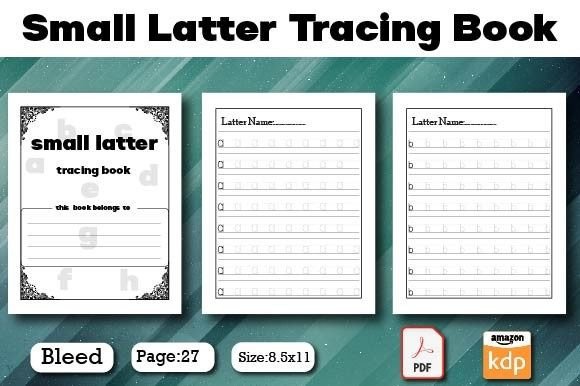
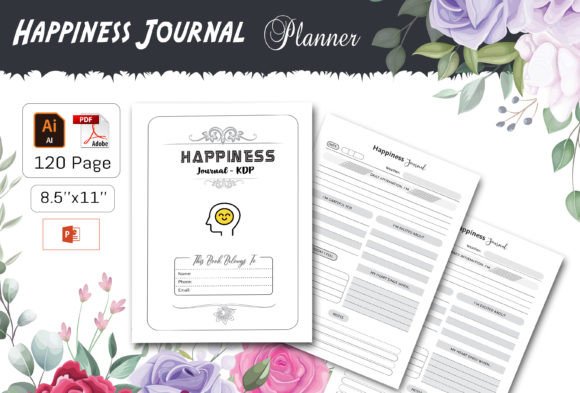
A distinct category of Happiness Journal exists for those interested in creating or customizing their own journal. This version is not a pre-filled book you purchase off a shelf. Instead, it is a complete interior file package, often formatted specifically for platforms like Amazon's Kindle Direct Publishing (KDP). This means the files are designed to be uploaded directly to produce a physical paperback or used to print copies at home or a local print shop. The product is the blueprint itself.
Typical packages, like the one described, offer a 6x9 inch file size—a standard and popular dimension for journals and books. They include multiple file formats: an editable vector file (such as an Adobe Illustrator .AI or .EPS), a PowerPoint (.PPT) presentation for easier color and text adjustments, JPEG image files for reference, and a final print-ready PDF. The inclusion of 100 resizable vector shapes and fully editable elements means the design is not static; you can change colors, adjust layouts, or add personal motifs before committing to print. This contrasts sharply with a standard, mass-produced journal where the interior design is fixed and unchangeable.
Comparing Approaches: Fixed Journals versus Customizable Files
When evaluating your options, it is helpful to understand the tradeoffs between different formats. A pre-made, bound Happiness Journal offers immediate convenience. You buy it, and you can start writing that day. Its limitations are inherent in its permanence: the prompts, page order, and aesthetic are set. You cannot adjust the exercises to better fit your personal reflection style or remove sections you find less useful.
The customizable Happiness Journal interior file exists on the other side of this spectrum. Its primary strength is adaptability. If you prefer a different color scheme to match your mood, or wish to integrate your own quotes alongside the provided prompts, the editable vector files allow for that. The 300 DPI resolution and print-ready PDF ensure professional-quality output if you choose to print it. However, this approach requires a level of digital literacy and effort. You need access to software like Illustrator or PowerPoint, and you must be willing to undertake the customization and publishing process. For someone who wants a truly personal tool or intends to create multiple copies for a group or small business, this format is a powerful alternative.
Strengths and Considerations of the Editable Format
The detailed package—including vector shapes, multiple file types, and a no-bleed PDF—suggests a product built for flexibility and control. The vector shapes are resizable without loss of quality, which is crucial for maintaining clean lines and text if you decide to alter a layout. The "no bleed" specification means the design fits precisely within the 6x9 inch page borders, which is ideal for standard printing where full-color edge-to-edge printing (bleed) is not required. This simplifies home or office printing.
Potential limitations reside in the technical requirements. While a PowerPoint file is more accessible than professional design software, some customization might still feel daunting to a user unfamiliar with digital design. Furthermore, this product is an interior file only; it does not include cover design files, which you would need to create separately for a published paperback. The value is deeply tied to your intent: are you looking for a ready-to-use journal, or are you seeking a template to own, modify, and potentially even republish?
Identifying Your Best Fit: When is This Happiness Journal Right?
This format of Happiness Journal is likely the right choice in several specific scenarios. If you are an educator, coach, or workshop leader looking to provide a consistent journal experience for participants, having an editable file allows you to brand it or tailor prompts to your program. Small business owners in the wellness space might find it a cost-effective way to produce a complementary product for their clients. For the individual user, the fit depends on your goals. If you see the journaling process as a creative project itself—where designing the tool is part of the joy—then customizing every element can be deeply satisfying.
Conversely, if your primary goal is to establish a daily habit with zero setup friction, a pre-designed, already-bound journal is probably a more suitable path. The time and effort invested in learning file editing, adjusting layouts, and managing print settings could divert energy from the actual practice of reflective writing. Similarly, if you do not have access to the suggested software or a reliable print solution, the practical hurdles may outweigh the benefits of customization.
Key Decision Factors in Your Evaluation
Making an informed choice involves weighing a few concrete factors. First, consider your technical comfort and resources. Do you have the software (Illustrator CC, PowerPoint) to open and edit the files? Do you have a means to print a 120-page, 6x9 document at sufficient quality, or do you intend to use a publishing service like KDP? Second, assess the importance of personalization. Is a fixed structure acceptable, or do you have specific visual or prompt requirements that only a customizable file can meet?
Finally, think about scale. Are you producing one copy for yourself, or many? The editable Happiness Journal file becomes increasingly economical and sensible when multiple copies are needed, as you avoid repeatedly buying individual pre-made journals. For a single user, the calculation is different; the cost and effort of customization must be balanced against the price and convenience of a finished product.
Practical Comparisons and Realistic Use Cases
Imagine two realistic examples. Anna is a life coach who runs monthly gratitude workshops. She purchases the editable Happiness Journal file. Using PowerPoint, she adds her company logo to each page, modifies a few prompts to align with her workshop curriculum, and changes the color scheme to a calming blue palette. She then uploads the final PDF to a local print shop and orders 50 copies for her next cohort. The file’s adaptability directly serves her professional needs.
In contrast, Ben is looking to start a daily gratitude practice to manage work-related stress. He wants to begin immediately and has no interest in design software. He opts for a beautifully bound, pre-printed Happiness Journal from a bookstore. It arrives ready to use, and he can focus entirely on filling it each evening. Both Anna and Ben achieve their goal of using a Happiness Journal, but the product format that served them best was entirely different, dictated by their context and objectives.
Exploring Alternatives and Complementary Resources
It is also worth noting that a Happiness Journal, in any format, is one tool among many. Some individuals may find that a simpler, blank notebook with a self-directed practice works equally well. Others might prefer digital apps that offer reminder notifications and data tracking. The editable file format discussed here sits in a niche that blends the tangible permanence of a physical journal with the flexibility of a digital tool. It is a hybrid solution.
If the technical aspect of editing vector files is a barrier, but customization is still desired, look for products that offer simpler online customization engines or template-filled Word documents. These might offer less graphic design freedom but require less specialized skill. Conversely, if you value high design but lack the time to edit, commissioning a designer to customize the file for you could be an alternative path, using the provided vector files as a professional starting point.
Ultimately, the decision revolves around aligning the product's capabilities with your personal or professional requirements. A Happiness Journal as a KDP interior file package is a resource for creation and ownership. It provides control over the final product, which can be a significant advantage for certain users. For others, the journey is about the writing, not the making, and a finished journal off the shelf will better support their path. By understanding these distinctions, strengths, and tradeoffs, you can select the resource that truly fits your approach to cultivating happiness and mindful reflection.