The Strategic Power of a Notary Journal for Professional Organization
In the fast-paced world of modern business and legal transactions, organization is not merely a convenience; it is a professional imperative. For notaries public, entrepreneurs handling contracts, and professionals managing sensitive documents, the systematic recording of acts is a cornerstone of accountability and risk management. This is where the deliberate use of a Notary Journal transforms from a simple logbook into a strategic tool for safeguarding your practice, enhancing client trust, and building a foundation for long-term operational integrity.
Beyond Basic Record-Keeping: The Journal as a Defense and Audit Tool
A professionally designed Notary Journal serves a far greater purpose than just listing dates and names. It is your first line of defense in the event of a dispute or legal challenge. Every meticulous entry creates a verifiable paper trail that can validate your actions and protect you from potential liability. Think of it not as an administrative chore, but as an ongoing audit of your professional conduct. By consistently documenting the details of each notarization—including the document type, signer identification, fees charged, and any pertinent remarks—you create an immutable record that speaks to your diligence and adherence to state laws and regulations.
This systematic approach directly supports your operational goals. It minimizes errors, prevents fraud, and ensures you can quickly retrieve information for follow-up queries or official audits. In a sense, your Notary Journal becomes a tangible reflection of your professional brand: one of order, reliability, and meticulous care.
Intentional Design for Practical Use
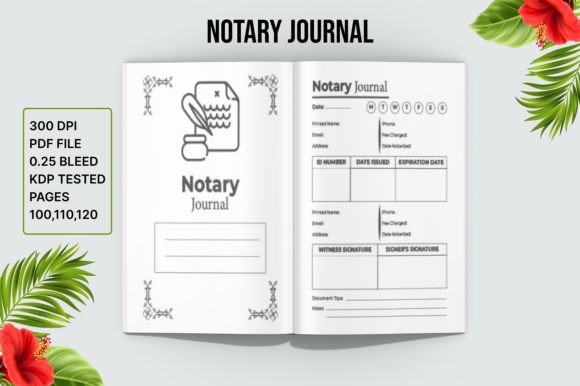
The utility of a Notary Journal is profoundly influenced by its design. A layout that prompts for all required information reduces the chance of omitting critical details. Considerations like ample space for entries, clear section headings for dates, signer details, and document descriptions, and a logical flow from one notarization to the next are not minor details. They are features that enable intentional use. When the journal is designed with the user's workflow in mind, recording becomes a seamless part of the notarial act, rather than a burdensome afterthought.
Strategic Implementation in Your Daily Practice
Integrating a Notary Journal into your workflow requires a conscious decision. The key is to treat it as a non-negotiable part of every transaction, akin to verifying identification. Establish a personal rule: the journal entry is completed concurrently with the notarization, not later. This habit ensures accuracy and completeness. Furthermore, consider the journal's role in your long-term planning. Where will it be stored? How will you ensure its security and confidentiality? Answering these questions upfront turns the journal into a managed asset within your business, contributing to a robust system for information governance and client data protection.
Practical examples of its strategic value abound. For a mobile notary servicing real estate closings, the journal provides a chronological record of a hectic day, allowing for easy reconciliation of services and fees. For a small business owner who notarizes internal documents, it offers a clear history of corporate actions. In each case, the journal moves beyond recollection; it provides evidence and clarity.
Planning for Volume and Growth
Your choice of a Notary Journal should align with your volume of work and growth aspirations. A journal with 100-120 pages may suit a moderate practice, while anticipating the need for a subsequent volume is a simple yet effective planning step. The physical quality—such as paper that withstands frequent use and binding that holds up over time—also matters. A durable, well-made journal signifies permanence and care, subtly reinforcing the serious nature of your records to anyone who sees it, including auditors or clients.
Risks of Neglect and Inconsistent Use
Relying on a Notary Journal without clear goals or consistent methodology introduces significant risk. A haphazardly maintained log, with incomplete entries or skipped transactions, is worse than having no journal at all. It presents a false sense of security while actually exposing you to greater vulnerability if its inadequacies are revealed in a dispute. The journal must be treated with the same gravity as the notarial seal itself. Furthermore, failing to understand your state's specific requirements for journal entries can render even a well-kept log insufficient from a legal standpoint.
Therefore, before implementing a journal, invest time in understanding the statutory mandates in your jurisdiction. This research is a strategic investment that ensures your tool is calibrated correctly for its primary purpose: legal compliance and professional protection.
A Tool for Enhanced Client Communication and Experience
A Notary Journal can also subtly elevate the client experience. The act of diligently recording the transaction in a formal book can reinforce the client's perception of the procedure's importance and legitimacy. It visually communicates professionalism and systematic attention to detail. For complex or high-value notarizations, you might briefly explain that the journal entry creates a permanent record for their protection as well as yours. This transparent communication builds trust and positions your service as thorough and client-focused.
Long-Term Value and Legacy of Records
The long-term value of a maintained Notary Journal accumulates over years. It becomes a historical archive of your professional activity. This archive can be invaluable for personal business reviews, tax preparation, or even defending against claims long after the memory of a specific event has faded. Each completed journal is a closed chapter of your practice, ready to be archived securely, while a new one begins. This cycle promotes continuous organization and provides a clear, physical demarcation of your professional timeline.
Making the Choice: Ready-to-Use KDP Interior Solutions
For the busy professional, creator, or publisher looking to offer or use a high-quality Notary Journal, ready-designed interiors for platforms like Amazon KDP present a strategic shortcut. These solutions, offering files in key sizes like 6x9 or 8.5x11 inches with proper bleed and CMYK color at 300 DPI, eliminate the design overhead. You can focus on the utility of the journal itself, rather than its technical creation. When selecting such a product, evaluate its layout for practicality, its page count for your expected volume, and its overall professional appearance. The right pre-made interior allows you to deploy a powerful tool immediately, concentrating your effort where it matters most: on the consistent and intentional use of the Notary Journal in your daily practice.
Ultimately, the strategic power of a Notary Journal lies in the mindset of its user. It is not a passive receptacle for information, but an active instrument of professional discipline. By approaching it with clarity of purpose, understanding its legal and operational roles, and integrating it seamlessly into your workflow, you transform a simple book into a cornerstone of your professional integrity and long-term success.