Optimizing Your Trading Strategy: The Role of a Cryptocurrency Trading Log Book V-2
For any serious cryptocurrency trader, whether a seasoned professional or a dedicated newcomer, the chaotic nature of the markets presents a significant challenge. Beyond price charts and technical indicators lies the critical task of personal accountability and strategic refinement. This is where a dedicated trading log becomes an indispensable tool. The Cryptocurrency Trading Log Book V-2 represents a specific evolution of this concept, designed not just as a passive record-keeping notebook but as an actively editable, professionally formatted system for analysis.
What Distinguishes the Cryptocurrency Trading Log Book V-2
At its core, the Cryptocurrency Trading Log Book V-2 is a structured digital interior template. It provides a consistent framework—120 pages of pre-designed layouts—for logging entries per trade, including date, asset, entry/exit prices, position size, and notes on strategy rationale and outcome. However, its defining characteristic is its full editability. Provided in Adobe Illustrator (AI) format alongside PDF and PowerPoint files, every element—colors, fonts, section styles, page sizes—can be modified. This transforms it from a static product into a customizable resource.
This is a significant departure from generic notebooks or basic spreadsheet templates. While a spreadsheet offers flexibility, it often lacks the guided structure and print-ready design. Conversely, a physical notebook offers tactile benefits but cannot be easily reformatted or updated without starting anew. The Cryptocurrency Trading Log Book V--2 attempts to bridge this gap by offering the organized structure of a professional log with the adaptability of a digital file.
Key Features and Practical Tradeoffs
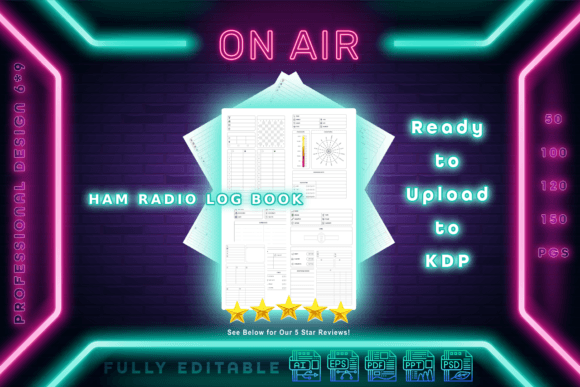
Evaluating this tool requires understanding its specifications and the inherent tradeoffs they present. It is formatted for a 6x9 inch book size with bleed, ready for professional printing or self-publishing via platforms like Amazon KDP. The use of CMYK color mode and 300 DPI resolution ensures the output matches print industry standards.
The Advantage of Customization
The editable AI file is the most powerful feature. A trader who finds the default "Trade Rationale" section too small can expand it. Someone who prefers visual cues can color-code sections for bullish or bearish setups. This level of control allows the log to evolve with a trader's strategy. For instance, a trader focusing on arbitrage might add columns for "Exchange A Price" and "Exchange B Price," while a macroeconomic trader could insert a section for "Key News Events."
However, this advantage comes with a clear prerequisite: access to and familiarity with Adobe Illustrator. This is a professional-grade software. Users without Illustrator skills, or who prefer simpler tools, may find the primary AI file less immediately usable. The included PowerPoint (PPTX) version offers some editability with a more common tool, but the design control is more limited.
Print-Ready vs. Digital-First Use
The package is explicitly "print-ready," with tested KDP interiors. This suits traders who value a physical, dedicated journal for review sessions away from screens. The act of handwriting entries can foster deeper reflection. The tradeoff is the loss of automated calculation and easy data sorting. You cannot, for instance, instantly calculate your weekly win rate from a handwritten log. This contrasts with purely digital solutions like specialized trading journal apps or complex spreadsheet databases that offer instant analytics.
The Cryptocurrency Trading Log Book V-2 offers a hybrid path. You can edit and personalize the design digitally, then print a physical copy for daily use, perhaps updating the master file periodically to include new metrics. This workflow blends the reflective benefits of a journal with the long-term adaptability of a digital template.
Comparing Approaches to Trade Journaling
When considering a tool like this, it's helpful to view it within the broader spectrum of trade documentation methods.
- Free-form Notebooks: Maximum freedom, zero structure. Ideal for traders who journal thoughts holistically, but poor for consistent data collection needed for statistical analysis.
- Basic Spreadsheets (Excel/Google Sheets): Excellent for data calculation and sorting. Can be structurally weak unless carefully designed, often lacking a dedicated space for qualitative notes and psychological reflections.
- Dedicated Trading Journal Software: Often includes automated performance metrics, cloud backup, and integration with some exchanges. Can be subscription-based and may lock you into a fixed, unchangeable data structure.
- Pre-formatted Physical Log Books: Provide structure and are ready to use immediately. Lack any customization; you must accept the designer's layout choices permanently.
The Cryptocurrency Trading Log Book V-2 sits uniquely between the pre-formatted physical log and the customizable digital spreadsheet. It gives you a professional starting structure but empowers you to become the designer of your own journal's evolution.
Identifying the Best-Fit User
This product is not a universal solution. Its value is maximized under specific conditions.
It is likely an excellent fit for traders who are committed to a long-term journaling practice and have a clear sense of the data they need to track. If you have experimented with basic methods and found them lacking—perhaps your spreadsheet is messy, or your notebook entries are inconsistent—this editable template offers a structured upgrade path. It is particularly suitable for those planning to create a physical product, either for personal use or for potential sale, as its KDP-tested, bleed-included formatting removes technical barriers to printing.
Furthermore, it serves traders who value both qualitative and quantitative analysis. The layout prompts for both numerical data (prices, sizes) and narrative data (rationale, mistakes learned), encouraging a holistic review. A trader analyzing a failed trade can see not just the incorrect entry price, but also read their own reasoning at the time, which is crucial for identifying cognitive biases.
When Another Option Might Be Necessary
There are realistic scenarios where a different approach would be more practical. A trader who requires real-time, automated journaling—perhaps one executing dozens of trades daily—would be better served by specialized software that can import trade data directly from an API. The manual entry required by any log book, including the Cryptocurrency Trading Log Book V-2, would be prohibitively time-consuming in such high-frequency contexts.
Similarly, a complete beginner who is still defining their basic strategy might find the array of columns and sections overwhelming. Starting with a simpler, free-form method to discover what information is actually useful to record might be a wiser first step before investing in a structured, editable system.
Finally, as noted, the reliance on Adobe Illustrator for full customization is a significant factor. A trader without the software or the desire to learn it would effectively be using the tool as a static PDF log. In that case, comparing the fixed layout of this PDF to other fixed-layout physical journals on the market would be a more relevant evaluation.
Making an Informed Decision
Choosing a trade journaling system is a personal decision that impacts your ability to learn from past actions. The Cryptocurrency Trading Log Book V-2 presents a compelling option for a specific user profile: the disciplined trader who values structure but demands control, who appreciates the physicality of a book but understands the need for digital adaptation, and who possesses the tools or willingness to engage with professional design software to tailor the resource perfectly to their evolving methodology.
Its strengths lie in its blend of guidance and freedom. It provides a robust framework to ensure consistency, which is the foundation of any useful analysis, while its editable nature ensures it never becomes a constraint. The tradeoffs are primarily around the need for manual data entry and the technical requirement for deep customization. By honestly assessing your trading volume, your review habits, your technical comfort with software like Illustrator, and your preference for physical versus digital review, you can determine if this particular tool aligns with your path toward greater trading discipline and insight.