The Significance of Letter Tracing Worksheets in Early Literacy Development
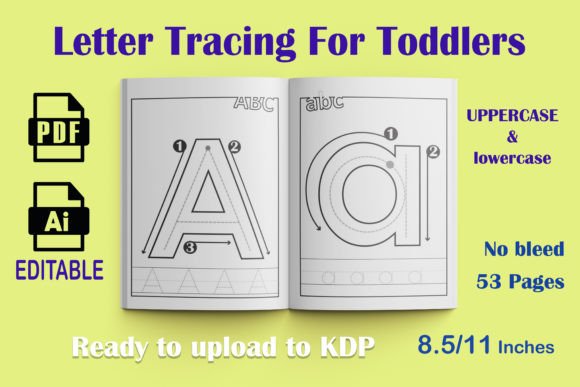
The journey towards literacy begins with foundational skills, and for many parents and educators, letter tracing worksheets serve as a primary tool. Among the numerous resources available, a structured product like Letter Tracing for Toddlers 53 Pages represents a specific approach. This downloadable package, designed for KDP (Kindle Direct Publishing) or home printing, offers a focused set of 52 worksheets covering both uppercase and lowercase letters A-Z, plus an additional page, totaling 53 ready-to-use pages. Understanding what this type of resource entails, and how it compares to broader educational strategies, is crucial for selecting the right materials for a child’s needs.
Defining Structured Tracing Resources
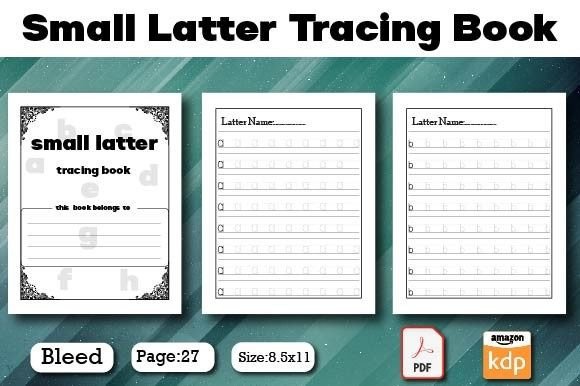
Letter Tracing for Toddlers 53 Pages is a digital product, an interior file package meant for printing. Its core distinction lies in its completeness and format. It provides a dedicated page for each letter in both its uppercase and lowercase forms, systematically arranged. The “KDP Interiors” label indicates it’s pre-formatted to specific publishing standards: an 8.5×11 inch trim size, no bleed (meaning no graphics extend to the edge of the page), and high resolution. This makes it a practical, turnkey solution for someone looking to create a physical workbook or print individual sheets without designing them from scratch. The offering includes files in PDF and AI (Adobe Illustrator) formats, catering to different levels of user technical ability.
Core Components and Immediate Utility
The value of such a package is its immediate utility. A parent or teacher downloading these 53 pages receives a full alphabet curriculum in a tangible form. Each worksheet is presumably dedicated to reinforcing the correct stroke order and form of a single letter, a method grounded in repetitive practice. This contrasts with more open-ended, play-based literacy activities. The structured nature ensures consistency; every letter receives equal attention, and the progression from A to Z is linear and predictable. For adults seeking a clear, no-prep activity to supplement learning, this format removes the uncertainty of creating or sourcing individual sheets.
Comparing Approaches to Early Letter Formation
When evaluating resources like this tracing worksheet package, it's helpful to consider the broader landscape of early writing tools. This product sits within a category of formal, worksheet-based instruction. Alternatives range from fully digital apps with interactive tracing, to hands-on sensory activities like forming letters in sand or with clay, to informal practice on blank paper.
The Worksheet Method: Strengths and Trade-offs
The primary strength of a comprehensive worksheet set like Letter Tracing for Toddlers 53 Pages is its clarity and efficiency. It provides a standardized, repeatable format that can help establish muscle memory for letter shapes. For a child who responds well to structured, sit-down tasks, it can build confidence through mastery of a predictable activity. It also creates a tangible record of progress—a stack of completed pages that both child and adult can observe.
However, the trade-off often involves engagement and developmental fit. For very young toddlers or children with minimal fine motor control, the precision required for tracing on a line can be frustrating. The activity is primarily visual and fine-motor, potentially neglecting multisensory pathways that strengthen learning. Furthermore, a strict A-to-Z progression might not align with a child’s natural curiosity, which might fixate on the letters in their name first, for example. A package like this assumes a one-size-fits-all sequence, which may not be optimal for every learner.
Situational Fit: When is a Structured Package the Right Choice?
A downloadable, printable tracing workbook is likely an excellent fit in several scenarios. For homeschooling parents or preschool teachers needing a large volume of consistent practice materials without a high per-page cost, the 53-page package offers economies of scale and time. For children who are already showing an interest in letters and possess basic pencil grip control, the structured practice can refine their skills. It's also a pragmatic choice for adults who prefer physical materials over screen-based learning and want a resource that is always available, without subscriptions or internet access.
Conversely, this might not be the primary tool needed for a child at the very earliest stages of mark-making. In those cases, broader activities that develop overall fine motor strength and hand-eye coordination are more foundational. Similarly, if a child displays strong resistance to worksheet activities, a more play-based or technology-integrated alternative might sustain their interest longer. The decision hinges on the child’s developmental stage, learning style, and the adult’s capacity to supplement the worksheets with other experiences.
Evaluating Format and Accessibility Features
The technical specifications of such a product are a key part of its evaluation. The inclusion of PDF and AI file formats in a ZIP archive, as noted in the description for Letter Tracing for Toddlers 53 Pages, speaks to different use cases. The PDF is universally accessible and ready for printing or upload to a platform like KDP. The AI file offers flexibility for graphic designers or advanced users who wish to customize colors, fonts, or layouts, though it requires specialized software. This dual-format approach caters to a wider audience than a product offering only a PDF.
The “no bleed” and “8.5×11” specifications are particularly relevant for self-publishing. For someone aiming to sell a physical workbook on Amazon KDP, this interior is pre-optimized for their printing process, reducing technical hurdles. For home printing, the standard size ensures compatibility with most printers and easy storage in binders. However, the “ZIP file” requirement is a minor consideration; users must be comfortable extracting files, which is a standard computer skill but could be a barrier for some.
Beyond Tracing: Considering Complementary Resources
A dedicated tracing package, while valuable, is rarely a complete literacy program. Its role is best viewed as a component within a larger ecosystem of learning. For example, tracing worksheets effectively build letter shape recognition and writing mechanics. However, they do not inherently teach letter sounds (phonics), word association, or contextual usage. Therefore, an adult choosing Letter Tracing for Toddlers 53 Pages would ideally pair it with activities that promote phonemic awareness, reading aloud, and letter play in everyday contexts.
In comparison to all-in-one preschool workbooks that mix tracing, coloring, matching, and simple reading, this specialized product is more focused. This focus can be an advantage if tracing is the targeted skill gap. But it might be a limitation if a single, multi-subject workbook is desired for broader daily use. The choice depends on whether the goal is targeted skill reinforcement or general curriculum coverage.
Decision Factors for Parents and Educators
Selecting a resource like this involves weighing several practical factors. First, consider the child’s readiness: Are they able to follow a guided line with a crayon or pencil? Second, assess the adult’s needs: Is the priority convenience and volume, or is it customization and adaptability? Third, evaluate the learning philosophy at play: Does a structured, sequential approach align with your educational values, or do you prioritize emergent, child-led exploration?
Letter Tracing for Toddlers 53 Pages, as a specific product example, scores highly on convenience, volume, and standardization. It is a solution for “I need all the tracing sheets, now, in a print-ready format.” It may score lower on adaptability and sensory engagement unless the user leverages the AI file for customization or actively combines the sheets with other tactile activities.
Making an Informed Choice for Early Writers
Ultimately, the decision rests on matching the product’s attributes to the specific situation. For a toddler showing keen interest in copying letters, and a parent preparing for kindergarten readiness with limited time for material creation, this type of downloadable package can be an efficient, effective cornerstone. For a setting where learning is more integrated and play-based, such a worksheet set might serve as an occasional supplement rather than the main activity.
The key is to recognize that tools like Letter Tracing for Toddlers 53 Pages exist within a spectrum of options. Their value is unlocked not just by the quality of the lines on the page, but by how they are integrated into a rich, supportive, and responsive learning environment. By understanding both the distinct utility of such a structured resource and its natural place within a broader pedagogical approach, adults can make more confident, informed decisions that truly support a child’s path to writing.