The All-Age Puzzle: Exploring the Benefits of a Nonogram Puzzle Book
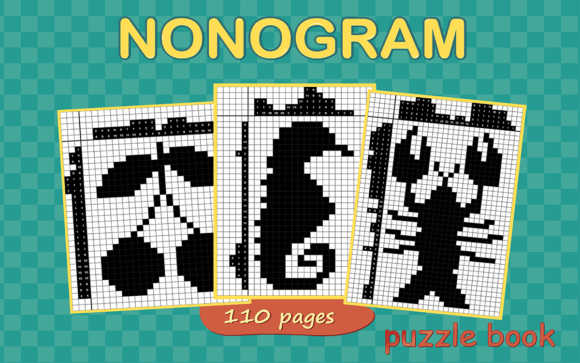
Picture a puzzle that merges logic, artistry, and quiet focus into one rewarding activity. That’s the essence of a Nonogram Puzzle Book for Kids. Often called Picross, Hanjie, or Griddlers, these books present grids where numbers on the edges guide you to fill in squares, gradually revealing a hidden picture. But while the name suggests it’s for children, the appeal and benefits stretch far beyond, making it a versatile tool for relaxation, creativity, and cognitive exercise for everyone.
What Makes This Nonogram Puzzle Book Special?
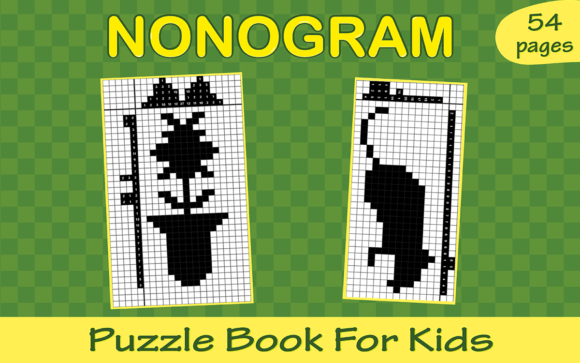
This particular collection is designed for broad accessibility and quality. It contains 54 pages of challenging nonogram puzzles, each accompanied by a solution for guidance or confirmation. The puzzles are crafted to be engaging for both kids and adults, meaning the difficulty curve is thoughtful, allowing beginners to learn and seasoned solvers to enjoy a satisfying challenge.
The physical design is also a key consideration. It uses good quality paper, which is important for a tactile puzzle experience, preventing pencils from tearing through and ensuring the book feels substantial. The size is a perfect 21.59 x 27.94 cm (8.5 x 11 inches), a standard and comfortable dimension that’s easy to handle, fits on most desks, and is readily portable. This format is also optimized as a KDP interior, meaning it’s ready for upload to Kindle Direct Publishing for self-publishing or for straightforward personal printing.
Beyond Fun: The Practical Benefits for All Ages
The core promise is to provide hours of fun, but the value runs deeper. Solving nonograms encourages positive emotions through achievement. Each completed puzzle is a small victory, building confidence and a sense of accomplishment. This can be particularly powerful for children developing problem-solving skills, but adults also benefit from this positive feedback loop in a world often devoid of instant, tangible results.
On a practical level, these puzzles improve hand-eye coordination and logical sequencing. You must interpret the numeric clues, translate them into spatial decisions on the grid, and execute precise markings. This engages multiple cognitive areas simultaneously. For adults, this can serve as a form of mental maintenance, keeping logical and spatial reasoning sharp. Furthermore, the activity is great for relaxation and creativity. The focused, step-by-step nature of nonograms acts as a mindfulness exercise, pulling attention away from daily stressors and into a state of flow. The creative element emerges in the revealed image—it’s a surprise picture you “draw” through deduction.
Real-World Uses and Applications
Where and how can such a puzzle book be used? The contexts are surprisingly varied.
- Family & Education: Parents and educators can use it as a shared activity. It’s a screen-free alternative that promotes quiet focus and collaborative logic-solving between adults and children.
- Personal Wellness: For professionals, entrepreneurs, or anyone with a busy mind, it’s a perfect desk-side or evening unwind tool. A 10-15 minute puzzle session can act as a cognitive reset.
- Creative & Commercial Projects: The included editable source file in Adobe Illustrator (.AI) format, plus the PDF-ready version with no bleed, opens doors for creators. Bloggers or marketers might adapt puzzles for their audiences, educators could create custom worksheets, and small business owners could use the format for branded activity books. The ready-for-KDP interior makes publishing your own version straightforward.
- Travel & Lifestyle: Its size makes it an excellent companion for trips, waiting rooms, or quiet café moments, offering a more engaging alternative to passive scrolling.
Key Considerations Before You Begin
If you’re new to nonograms or considering this book for a specific purpose, a few observations are helpful. First, understand that while solutions are provided, the real joy is in the struggle and discovery. Encourage beginners, especially children, to use the solutions as a learning tool rather than an answer key—to check their work and understand their mistakes.
Also, consider the dual-audience design. The puzzles are intended to be “for kids and adults,” which means some will be simpler and some more complex. This variety is a strength, allowing the book to serve a household or individual over a long period, but it’s good to know that not every puzzle will be of uniform difficulty.
Finally, for those interested in the technical files (AI, PDF), ensure you have a basic understanding of Adobe Illustrator if you intend to edit. These files offer tremendous flexibility for customization, but they are most valuable if you have a specific project in mind, such as creating your own puzzle book derivative or extracting puzzles for digital use.
Embracing a Simple Tool for Complex Benefits
In essence, a well-designed Nonogram Puzzle Book for Kids transcends its label. It is a physical object engineered for quality use, a cognitive tool that sharpens logic and coordination, and a creative asset with editable source files for further projects. Its 54 pages represent a reservoir of focused calm, achievable challenges, and surprising artistic revelation. Whether you seek a gift, a personal hobby, a wellness aid, or a base for your own creative venture, this type of puzzle book offers a uniquely blended value—proving that sometimes the simplest formats, a grid and numbers, can support the most complex and rewarding human needs: fun, focus, achievement, and creativity at all ages.